Know Your Risk: Genetic Testing for Cancer Predisposition
By Margaret Erpelding, CGC,
Certified Genetic Counselor
How do genetics play a role in cancer?
Our body is made up of cells. Our cells have their own instructions on how to grow, and function called genes. Our genes are made up of DNA. When there is damage or changes to our genes that are in charge of the way cells grow and multiply, our cells can grow out of control. Cells that are growing out of control cause cancer. DNA changes can happen randomly, caused by the environment or inherited from a parent.
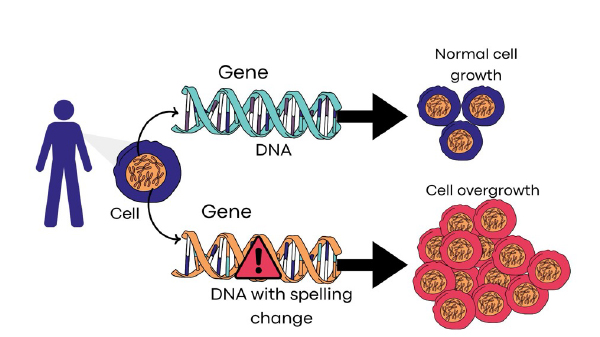
Random mistakes in DNA replication can lead to DNA changes and are more likely to happen as we age. Our DNA can also be damaged by our environment, things like tobacco, sun exposure, and more can lead to DNA changes causing cancer. Inherited changes are passed from parents to children and increase someone’s risk of cancer, but not everyone with a genetic change will get cancer. About 5-10% of all cancer cases are due to inherited genetic changes.
Should I have genetic testing?
Genetic testing is always optional, and a genetic counselor can help you decide if it is the right choice for you. Genetic testing is recommended for individuals or families that have cancers diagnosed at a young age (often thought to be less than 50), with many cancers on one side of the family, or rare types of cancer. Genetic testing can help people feel more empowered and understand their risks. Seeing a genetic counselor can help you understand your risk and make an informed decision about genetic testing.
What happens at a genetic counseling appointment?
At Minnesota Women’s Care, genetic counselors provide risk assessments and education to patients who are interested in exploring their genetic risks or family history. Our counselors specialize in women’s health and are trained to discuss your family and/or personal history of cancer. Learning more about your genetics may be important because it can provide insight into family planning and cancer risks.
During a genetic counseling appointment, our counselors ask questions about personal and family medical history. They will also discuss the different options for genetic testing. Genetic testing can provide information that can change personal health management such as more frequent mammograms. Genetic counselors provide clear and compassionate care to support patients and aid in decision-making. If you’re concerned about your risk of developing cancer – whether due to a family member’s history of cancer or your own medical history – genetic counseling can help you understand your risk and make knowledgeable decisions about your health care.
For more information about genetic counseling or to make an appointment call 651-600-3035 or talk to your Minnesota Women’s Care provider about a referral.
Topics
Share this page:
About the Author
Margaret Erpelding, CGC, Certified Genetic Counselor
 As a Certified Genetic Counselor, Margaret specializes in reproductive, prenatal, and cancer genetics. She brings a strong background in research and patient-centered counseling, offering personalized guidance to individuals and families as they navigate complex genetic information.
Her expertise includes supporting patients through pregnancy planning, understanding abnormal screening results, and evaluating family history of genetic conditions. Margaret’s compassionate and clear approach empowers patients to make informed decisions about genetic testing and their healthcare journey.